
"Cemetry Gates"
Craft, Doubt, and the Quiet Discipline of Greatness

“When we signed with Rough Trade we were being hailed as The Great New Songwriters, and I was on the train coming back thinking, "Right, if you're so great - first thing in the morning, sit down and write A Great Song. I started with Cemetry Gates' BM to G change in open G...” - Johnny Marr, interview, The Guitar Magazine, January 1997.
This passage underscores the creative and mechanical genius of Johnny Marr as a songwriter and musician, grounding the otherwise mystical genesis of the songs of the Smiths. A “Great Song” does not begin with a concept, a lyric, or a manifesto; it begins with a physical action: a tuning, a specific interval under the fingers. Craft precedes mythology. The quote lays bare the process behind songs that were not only great in their own time, but that continue to endure the crucial and unforgiving test of time.
Remarkably, Johnny Marr was unhappy with his initial efforts on “Cemetry Gates”, believing that the guitar part was not interesting enough to be developed into a song. Morrissey liked it and convinced Marr that it was worthy of being released. Marr recalled “I did this in my kitchen with Morrissey. When I played it I wasn’t sure about it – but that’s one example of how a partnership works. Because Morrissey loved it, and it came so effortlessly and easy. I was just about to bin it.”1
Stephen Street, who acted as recording engineer on the track, stated that “the vibe was just wonderful” while recording the song.2 Street later said of the song: “It’s all the best elements of the Smiths. And what a wonderful vocal and lyric. It’s a nice bit of blessed relief. It’s delicate, but it’s still got power“.3
Musically, the song is marked by harmonic ambiguity, hovering between melancholy and brightness. The tempo is brisk and faintly nervous, with the rhythm section staying understated so the guitar supplies most of the motion. There is no climax, no showmanship. Instead, Marr’s arpeggiated guitar lines are light and restrained, running parallel to the vocal rather than supporting it, creating a delicate tension.
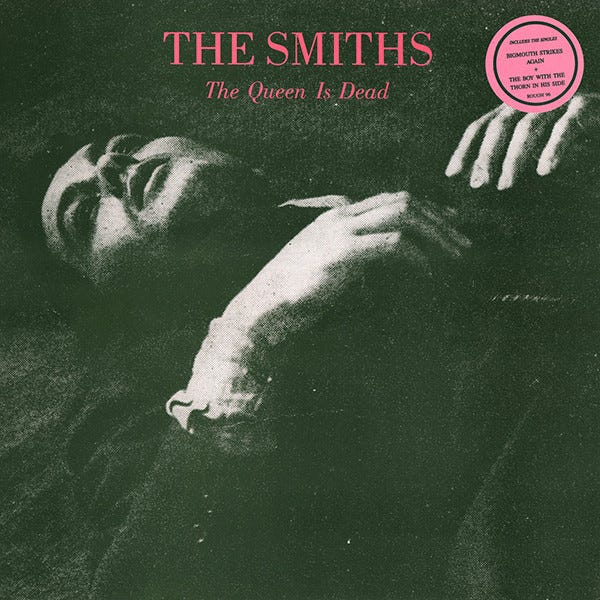
“Cemetry Gates” was recorded between October and November 1985 at Jacobs Studios4 during the sessions for The Queen Is Dead studio album. The track was produced by Morrissey and Johnny Marr and appears as the album’s fifth song on its June 1986 release.
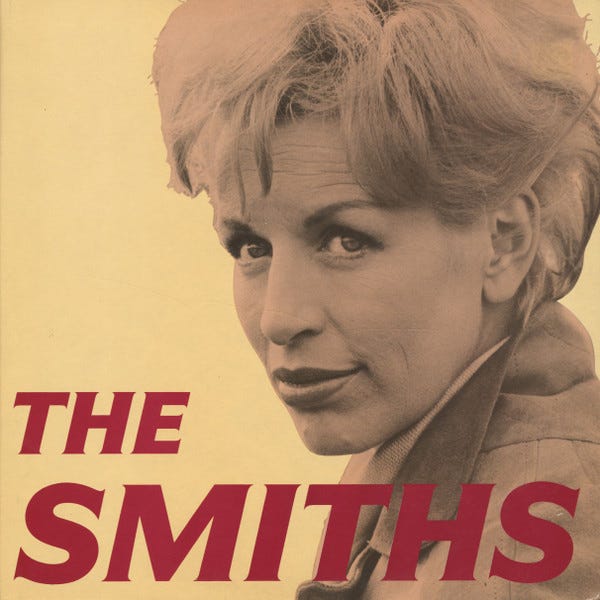
It also features as the B-side to the Smiths’ “Ask” single, issued in October 1986. In the UK the runout on the single’s B-side was etched with “TOMB IT MAY CONCERN”. The song is included on the 1995 re-issue of the “Ask” single.
A live rendition of the song was later released on the band’s 1988 live album, Rank, before resurfacing two decades later on in the 2008 compilation The Sound of The Smiths, and finally finding its place once more on 2011’s comprehensive retrospective, Complete.
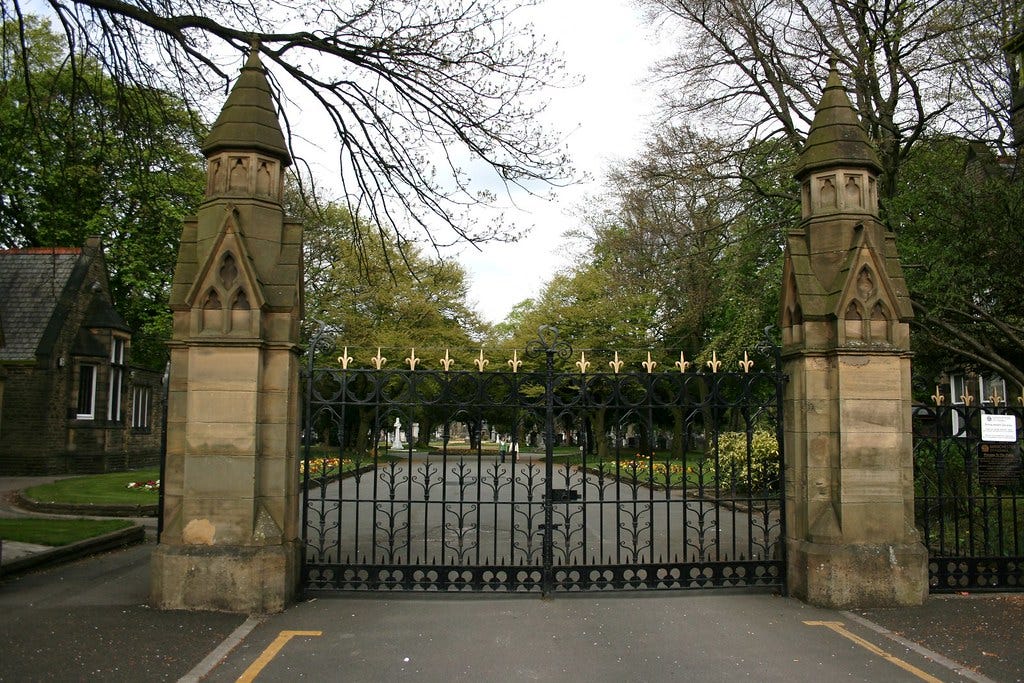
Inspired by walks with friend Linder Sterling through Southern Cemetery in Manchester, Morrissey’s lyrics describe two friends spending a day at the graveyard, where one of them lectures the other on the pitfalls of plagiarism:
If you must write prose and poems
The words you use should be your own
Don’t plagiarize or take “on loan”
This is done with a twist of irony as the song actually contains dialogue from the 1942 American film The Man Who Came To Dinner virtually word for word. See the following lyrics and then watch the attached clip from the film:
All those people
All those lives
Where are they now?
With loves, and hates
And passions just like mine
They were born
And then they lived
And then they died
Seems so unfair
I want to cry
This is a clear snub to critics who expressed scorn at Morrissey’s habit of quoting literary sources in his lyrics, most notably Oscar Wilde. That motive is underscored by the song’s sixth verse, which includes the line, “You say: ‘Ere thrice the sun hath done salutation to the dawn,’” a direct echo of Scene III, Act V of Richard III by William Shakespeare:
Richard III: Who is there?
Ratcliffe: ’Tis I. The early village-cock hath twice done salutation to the morn…
Presumably, the critics received the message exactly as Morrissey intended.
The Smiths performed the song a total of 41 times, while Morrissey has performed it 21 times to date, all during the course of his Swords tour in 2009.
Joe Taysom, Far Out Magazine. “Johnny Marr and Morrissey’s track-by-track guide to The Queen Is Dead by The Smiths.” June 2020.
Tony Fletcher, A Light That Never Goes Out: The Enduring Saga of the Smiths (New York: Crown Archetype, 2012).
Joe Taysom, Far Out Magazine. “Johnny Marr and Morrissey’s track-by-track guide to The Queen Is Dead by The Smiths.” June 2020.
Named after a breed of sheep traditionally farmed in the surrounding area, Jacobs Studios was a recording studio, now closed, located in Farnham, England.