
Friday Mourning


'Friday Mourning' was released on October 11, 2004 on the B-side of Morrissey's 'Let Me Kiss You' single (on the three-track CD version of the single). The single reached number eight on the UK Singles Chart.
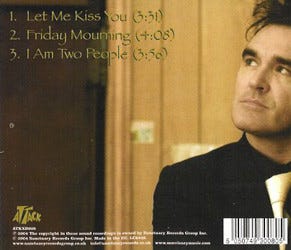
The song was included as a bonus track on the deluxe edition of the You Are the Quarry studio album, which was released on November 22, 2004 (fully six months after the initial release of the album). The song was included on the Live At Earls Court album (2005) as well as the Swords compilation album (2009).

Alain Whyte is credited as co-writer on the track, which was recorded in July 2004 in Los Angeles (likely Conway Studios1) with producer Jerry Finn. The musicians on the recording were Boz Boorer (guitar), Jesse Tobias (guitar), Gary Day (bass), Dean Butterworth (drums) and Michael Farrell (keyboards).
The song has only been performed six times by Morrissey, all during the 2004 You Are The Quarry tour2.
Listen to ‘Friday Mourning’ here:
What stands out on 'Friday Mourning' is its mellow and exceptionally tight sound. One can discern more than a hint of restraint as Morrissey crisply sings. It is rather puzzling that the song is not one of Morrissey's better known tracks as the lyrics, which describe the alienated protagonist as having had quite enough and moving on ("I won't be coming back"), can be fairly described as both mature and insightful.
Far from being a pedantic "woe is me" song-and-dance, the lyrics of 'Friday Mourning' aptly illustrate the trauma of an individual who has suffered what amounts to a lifetime of derision beginning at an early age and continuing throughout childhood and into adulthood:
And when they haul me down the hall
And when they kick me down the stairs
I see the faces all lined up before me
Of teachers and of parents and bosses
Who all share a point of view
"You are a loser"
Rather than capitulating to this pattern, the protagonist finally rejects it ("there comes a time before that breaks this very smug mug of mine") by moving on. Whether Morrissey is implying suicide (which his references to 'Dressed in black' and substitution of 'mourning' in place of morning in the title) is not clear. What is clear to those readers who've both experienced and tolerated derision over the long term is that one can choose to live with it, or choose to live without it. The former approach is symptomatic of someone who tacitly believes that they are being treated in a manner that they deserve, while the latter approach requires conviction and true character of
