
"Istanbul"
Morrissey’s baleful ode to redemption lost

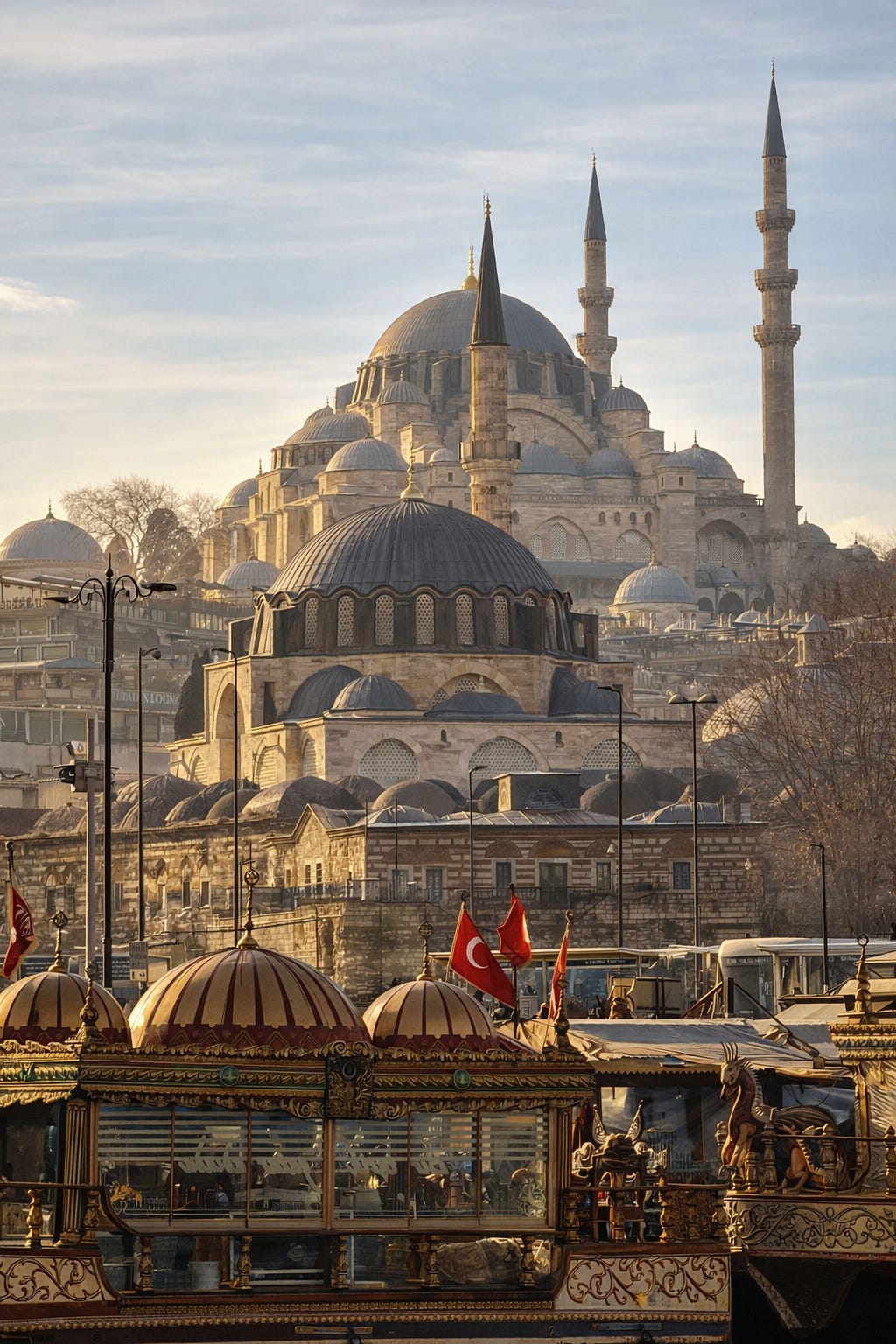
Morrissey’s 46th single, “Istanbul,” unfolds as a sorrowful monologue voiced by an estranged father confronting an ambiguous loss, whether caused by abandonment at birth or by neglect over time. Offering fragments rather than a continuous history, the song begins with confession and belated remorse: “When he first cried his mother died / I had tried to be his guide / when he was born I was too young” and the anguished admission, “oh, what have I done?” Responsibility is acknowledged only after loss has already taken root.
The son’s life is recalled not through intimacy but through observation, rendered in disconnected images that emphasize distance rather than connection: “On secret streets in disbelief / Little Shadow shows the lead / Prostitutes stylish and glum / in amongst them you are one.” These glimpses suggest a world the father can witness but never enter, reinforcing the song’s central tension between recognition and irretrievable absence.
The narrator desperately searches for his “brown-eyed” son to no avail. The recurrent references to Istanbul function as a plea to an indifferent force, emphasizing the narrator’s fundamental powerlessness:
the father searches for the son
in Istanbul
give him back to me
Istanbul, give me back my brown-eyed son1
At its core, “Istanbul” is a study of profound guilt and regret that offers neither redemption nor moral correction. The final lines of the song, “I lean into a box of pine / identify the kid as mine,” make this explicit. The narrator at last looks upon his son only when recognition no longer carries consequence, denied any opportunity to address or amend the failures of the past. The tragedy is thereby intensified, leaving the listener, like the narrator, without resolution.
As with Morrissey’s use of place in “Mexico”, the song is less concerned with Istanbul as a literal location than as a metaphor for dislocation and distance, both physical and emotional. The city’s identity - neither fully East nor West, neither wholly foreign nor comfortably familiar - mirrors the narrator’s internal state. Estrangement, belated emotional awakening, and the futile search for what has already been lost converge, reinforcing the song’s central truth: some distances cannot be crossed, no matter how sincere the desire to return.
The muffled adhan, heard before the music even begins, signals that this is not Morrissey’s usual fare. The arrangement is slow and deliberate, shaped by a vaguely Eastern palette, most notably through the use of a baglama2 or similar instrument.3 There are also distinct hints of a Kanun4 being played in the outro. The song’s restrained instrumentation is distinctly atmospheric, imbuing the track with a mood that is tense and foreboding, clearing space for Morrissey’s vocals, lightly echoed, to occupy the emotional foreground.
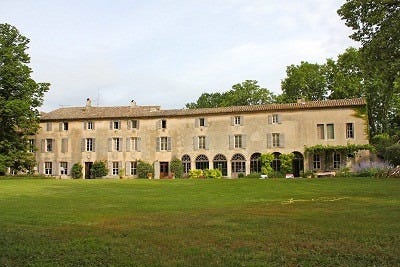
The song was recorded along with the other tracks for the World Peace Is None Of Your Business studio album at La Fabrique5 in Saint-Rémy de Provence, France in February 2014. Produced by Joe Chiccarelli, the musicians on the track were Boz Boorer and Jesse Tobias on guitars (with multi-instrumentalist Boorer likely doing double-duty on the Baglama and, possibly, the Kanum), Solomon Walker on bass, Matt Walker on drums and Christophe Minck6 on Harp.
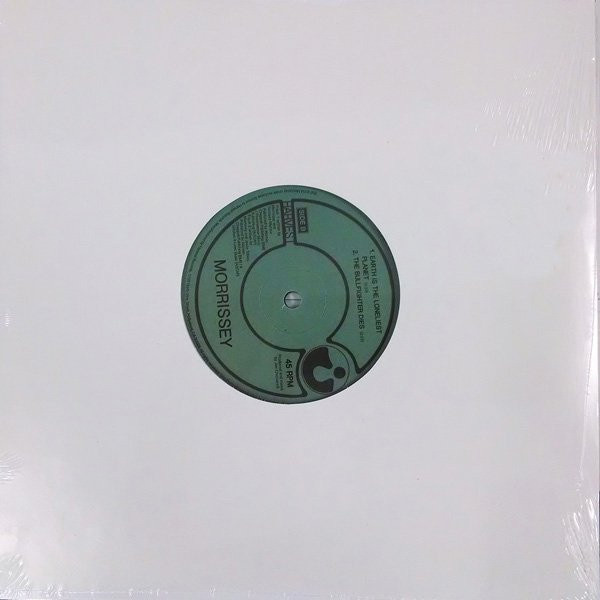
“Istanbul” was released as a digital download single on 20 May 2014, peaking at number 53 on the UK Singles Chart. This was followed by a limited release on 7 July, 2014 in the United States in the form of a 12-inch vinyl disc. The US release was limited to only 1000 numbered copies issued in a plain die-cut sleeve.
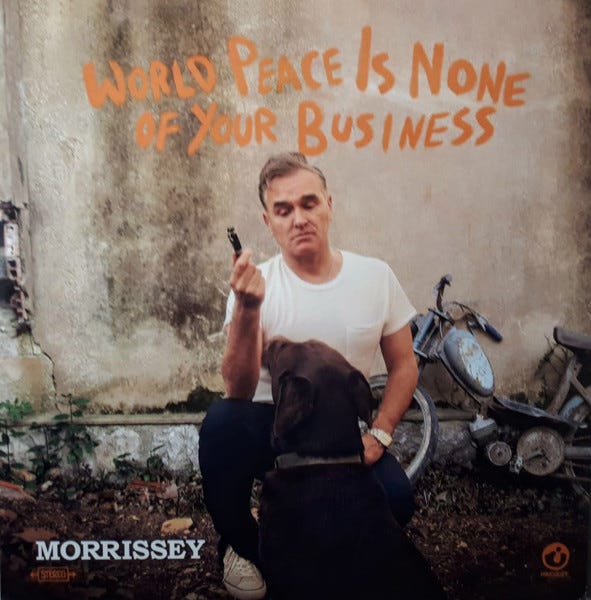
The song appears as the fourth track on the World Peace Is None Of Your Business studio album, Morrissey’s tenth solo album, which was released 14 July 2014.
Morrissey explored the song in some detail in an interview with Turkish journalist, columnist, author, and vegan animal liberation activist, Zülâl Kalkandelen in the wake of its release:
Question: “You said you pushed the label for a proper video for ‘Istanbul’ but they backed off. Have you had a specific idea or narrative for the video?”
Morrissey: “Yes, it was based on the opening scenes of West Side Story, with the band and I actually dancing through the streets. Harvest [Records] just wouldn’t do it. It was the first snap in our relationship, mainly because they didn’t have any alternative ideas. I don’t mind objections if someone has a better idea. Ultimately the head of Harvest DID have an idea … which was ‘let’s get rid of Morrissey’.”
Question: “You say when you’re in Istanbul you feel as if you could never die. And you should know that when you sing in Istanbul, we [the fans] feel the same. When are we going to experience this wonderful mutual feeling again? In October?”
Morrissey: “In December. It is a Sunday evening7. I’ve always tried to get Istanbul Opera House, but it’s never available… or it doesn’t exist.”
Question: “You revealed that Istanbul is second only to Rome as your most favorite city in the world.”
Morrissey: “In Istanbul and Rome I can walk and walk and walk…”
His own creative thoughts on a music video for “Istanbul” having been scotched by Harvest Records, on 20 May 2014 Morrissey instead released a spoken-word promotional video directed by Natalie Johns8 in support of the forthcoming album. The video shows Morrissey in a dark room with a whiskey tumbler and a flower-filled gramophone. He recites the song’s lyrics over a quiet, jazzy background. See the spoken word video for “Istanbul” here:
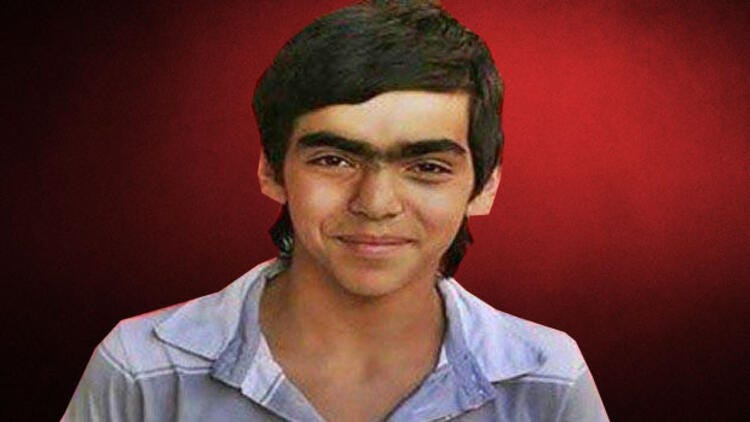
Many Turkish fans perceived this line as being a veiled reference to Berkin Elvan, a 15-year-old boy who was hit on the head by a tear-gas canister fired by a police officer in Istanbul during the June 2013 anti-government protests in Turkey. He died on March 11, 2014 from his injuries. Morrissey has not directly affirmed Berkin as being the “brown-eyed” boy in the song. Instead, he has framed Berkin’s death as part of a recurring global pattern in which states respond to peaceful dissent with violence, particularly against young people. In this context, “Istanbul” becomes a sort of vessel for collective grief. The tragedy is not unique to Turkey; it is the system that is consistent. See http://www.veganlogic.net/2014/09/morrissey-last-thing-security-forces.html
The Baglama is one of the core instruments found in Turkey’s folk ensembles and orchestras. It can even be heard on many modern popular music songs today. As the Baglama can be tuned in a variety of different ways, this makes it such an interesting instrument for a variety of Turkish styles, both within traditional and popular music.
Producer Joe Chiccarelli stated that “Morrissey wanted to evoke the feeling of the hectic and chaotic streets of the city of Istanbul, so he used a cigar-box guitar, a lap steel guitar and a complicated and busy drum rhythm, plus an actual gong as percussion, as well as vocal samples from a field recording taken in the streets of Istanbul by guitarist Jesse Tobias.”
A very popular instrument that is played widely across the Middle East, North Africa, and Central Asia. The Kanun holds an important place in Turkish music and is found in most folk ensembles.
Located in a mansion that dates from the beginning of the 19th century, the recording studio was established in 2003 by French sound engineer Hervé Le Guil. Hervé’s son, Maxime Le Guil, was the engineer on the World Peace Is None Of Your Business album.
Christophe “Disco” Minck is a French multi-instrumentalist, producer and composer.
Indeed, a concert was scheduled for Sunday, 7 December 2014 at the Volkswagen Arena in Istanbul. This concert was postponed to 17 December 2014. Unsurprisingly, “Istanbul” was performed (third song on the set-list). Morrissey bid a fond farewell to the audience with an enthusiastic “Istanbul, I love you!”
Award winning and Emmy Nominated filmmaker Natalie Johns was born in Zimbabwe, grew up in South Africa and established her career in London where she specialized in live entertainment television and documentary film.