
Notre-Dame
Inquiry, Orthodoxy, and the Price of Asking

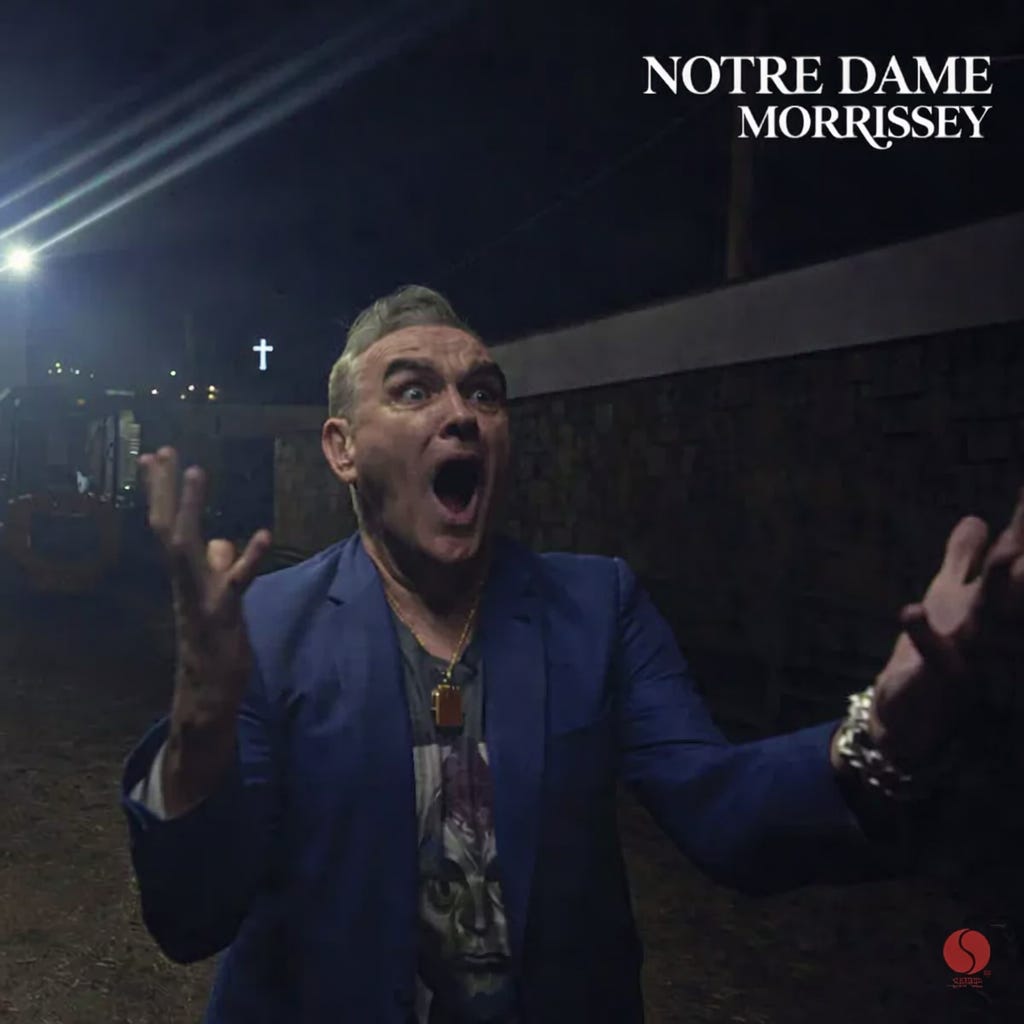
Released on 6 February 2026, “Notre-Dame” is Morrissey’s 66th (!) single and one of the twelve tracks on his 14th studio album, Make-Up Is a Lie (slated for release on 6 March 2026). The song follows closely on the heels of the release of the title track from the upcoming album on 9 January 2026.
The song was co-written with long-term collaborator Alain Whyte, who also provides backing vocals on the recording. According to Morrissey Central,1 the musicians on the track are Carmen Vandenberg and Jesse Tobias on guitars; Juan Galeano on bass, synth, and keyboards; Camilla Grey on keyboards; Brendan Buckley on drums; and Ambroise Sage2 on string arrangements. The song was produced by Joe Chiccarelli.
At the risk of stating the obvious, the song’s title references the medieval Catholic cathedral in the 4th arrondissement of Paris, France, the formal name of which is Notre-Dame de Paris (translated into English as “Our Lady of Paris”). The cathedral, dedicated to the Virgin Mary, is considered one of the finest examples of French Gothic architecture.
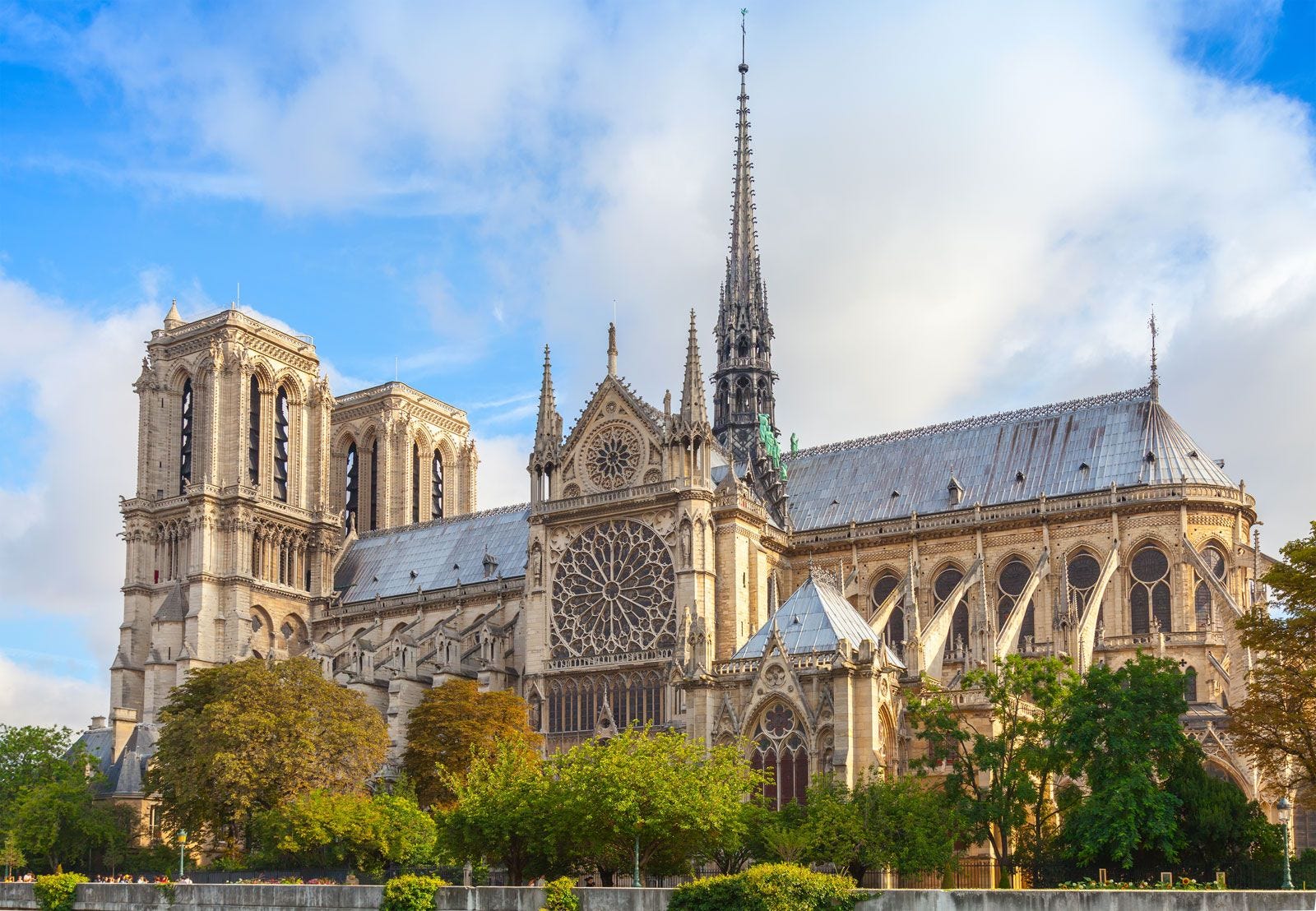
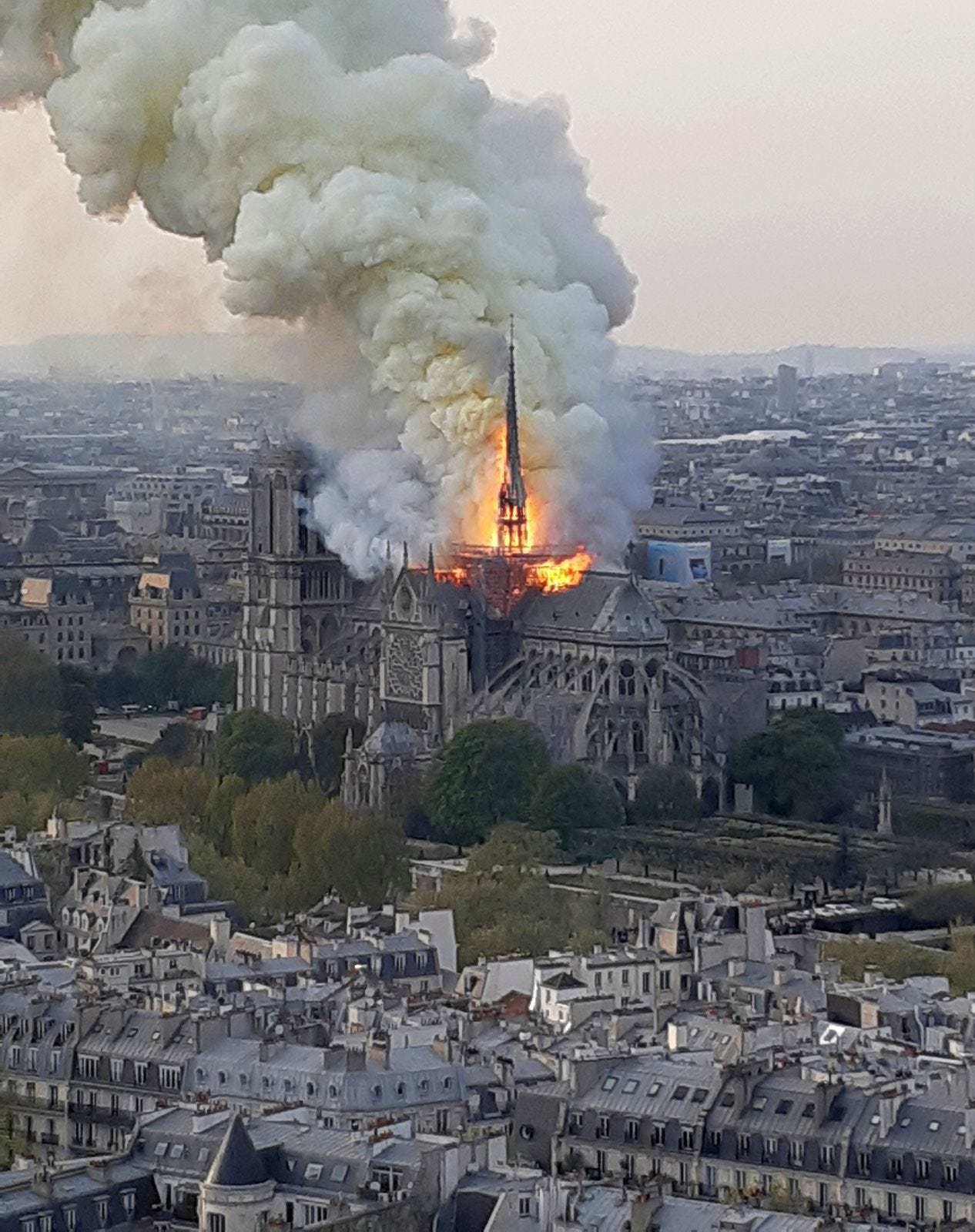
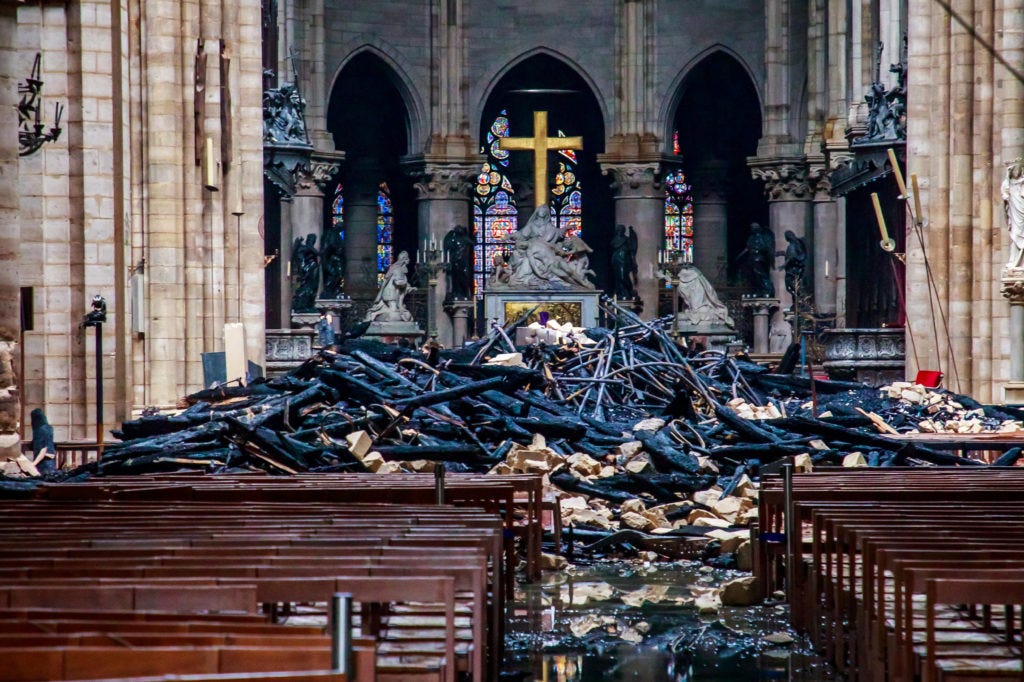
Construction of the cathedral began in 1163 and was largely completed by 1260. On April 15, 2019, while in the midst of a major renovation and restoration, Notre-Dame’s roof caught fire and burned for 15 hours. The cathedral sustained serious damage. The flèche (the timber spire) was destroyed, as was most of the lead-covered wooden roof above the stone-vaulted ceiling. Nearly seven years later, a definitive cause of the blaze has not yet been established, although it has been ruled “accidental” and possibly linked to the restoration work.
Édouard de Lamaze, president of the Paris-based Observatoire du patrimoine religieux (translated as “Observatory of Religious Heritage”), stated in a 2021 interview that in France one religious building disappears every two weeks, whether by demolition, transformation, destruction by fire, or collapse. He further noted that a staggering two-thirds of fires in religious buildings are due to arson.
In prior years, the destruction of religious buildings in France by arson was decidedly rare. In recent years, it has become a regular occurrence and does not even take into account rising incidents involving physical attacks upon Catholic clergy (including the murder of a French priest in July 20163 while he was conducting Mass in a Catholic church). The emergence of these types of incidents is a controversial issue. One may draw one’s own conclusions.
If his 2009 song “I’m Throwing My Arms Around Paris” is any indication, Morrissey has a deep affection for the “City of Lights,” so it should come as no surprise that the Notre-Dame fire garnered his attention.
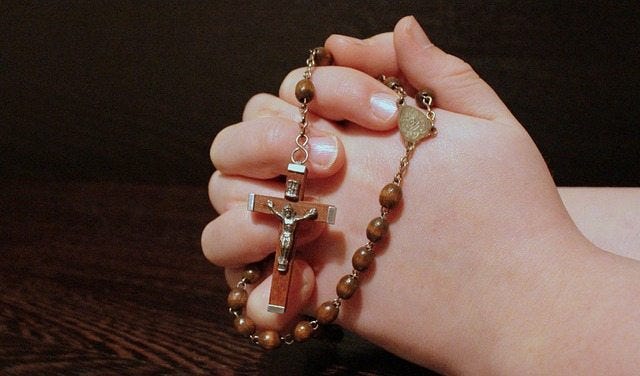
Morrissey premiered “Notre Dame” in concert at Binyamina–Giv’at Ada, Israel, on 2 July 2023, going on to perform it seven more times during his Live in Concert 2023 tour. The song’s debut performance saw the normally secular Morrissey reveal a hidden rosary4 strung around his neck, holding up the crucifix to the audience while singing the lines: “Notre-Dame, we know who tried to kill you. Notre-Dame, we will not be silent. Before investigation, they said, ‘This is not terrorism.’ They said there is nothing to see here.”
The official release of the song revealed that the reference to terrorism had been excised from the lyrics. While Morrissey has yet to explain this revision, the reference to terrorism has proven highly contentious among some who perceived it as an attempt to link the 2019 fire that gutted the cathedral to anti-immigrant narratives. In light of Morrissey’s long-running record label debacle, one would be hard-pressed not to presume that the revision may have been a sop to Sire Records5 to render the song slightly less controversial and thus secure its release.
The lyrics of “Notre Dame” do the unspeakable: they question the official narrative that the cathedral fire was purely accidental, an action that shall not be brooked in the minds of certain segments of Western society. It would not be unrealistic to presume that Morrissey is of the opinion that the Notre-Dame fire was not the result of an accident and that the official, state-sanctioned narrative is merely a sanitized and politically convenient version of the event. Once again, one may draw one’s own conclusions; however, not everyone has their work product held in perpetual limbo for years in order to both punish and silence a voice that asks inconvenient questions and expresses opinions that do not always conform to prevailing orthodoxies.
One would be remiss to not mention that proponents of violent jihad specifically target places of worship as it is their belief that Islam is the only religion and that it must be adopted by the followers of other faiths. None other than the BBC has said as much.6 While this doesn’t prove anything insofar as evidence of what occurred on April 15, 2019 in Paris, it cannot be ignored either.
If “Notre Dame” disturbs some listeners, it is not because of Morrissey’s conclusions, but because he insists on asking questions. The unease lies less in the song itself than in its willingness to probe migration, extremism, and the vulnerability of religious institutions - subjects many would prefer remain unspoken, particularly given the hostile reception Morrissey’s statements have drawn over the years. Yet a liberal democracy derives its strength not from suppressing inquiry, but from engaging it. The Enlightenment tradition that undergirds the West presumes that truth can withstand scrutiny and that institutions rooted in centuries of belief do not collapse under examination. When debate becomes taboo, moral certainty begins to resemble dogma, and the refusal to entertain dissent risks mirroring the very intolerance it claims to oppose. Morrissey’s defiance, then, is less provocation than reminder: a civilization confident in its foundations does not fear questions.
See Morrissey’s premier performance of ‘Notre-Dame’ in the following link:
“New Recording,” Morrissey Central, https://www.morrisseycentral.com/messagesfrommorrissey/new-recording.
Ambroise "Sage" Willaume is a French singer, guitarist and producer.

Jacques Hamel (1930–July 2016) was a French Catholic priest who was murdered during the 2016 Normandy church attack (July 26) by two Muslim men pledging allegiance to the Islamic State of Iraq and the Levant while Father Hamel was celebrating Mass in his church.
A rosary consists of a string of beads, a medal, and a cross. A rosary is used in prayer.
Morrissey signed with Sire Records in December 2025 after fully three years without a record label, following his “voluntary withdrawal” from Capitol Records.
BBC News, “Iraq’s oldest Christian monastery destroyed by Islamic State,” BBC News, July 26, 2016, https://www.bbc.com/news/world-middle-east-35360415.