
'The Headmaster Ritual'
"I expect you'll be becoming a schoolmaster, sir. That's what most of the gentlemen does, sir, that gets sent down for indecent behavior." -Evelyn Waugh, Decline and Fall (1928)

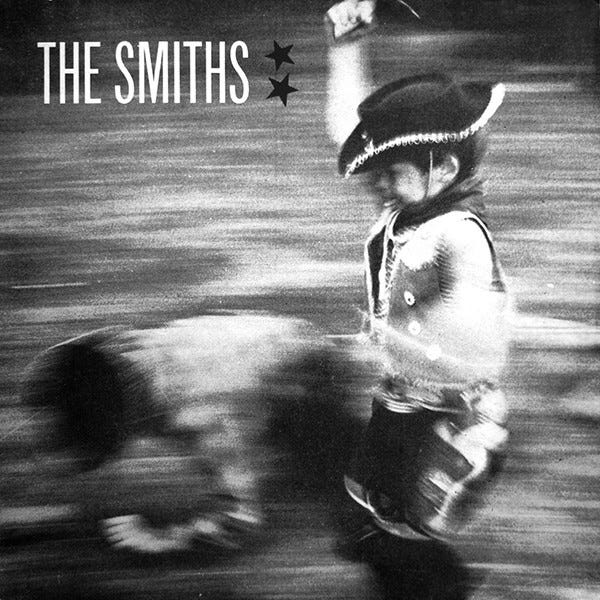
'The Headmaster Ritual' was the first song on the Smiths second studio album, Meat Is Murder, and was released as a 7-Inch single in the summer 1985 in the Netherlands.
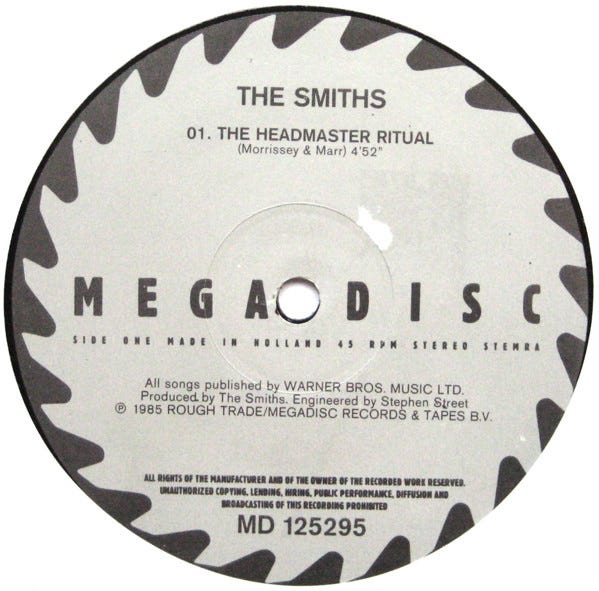
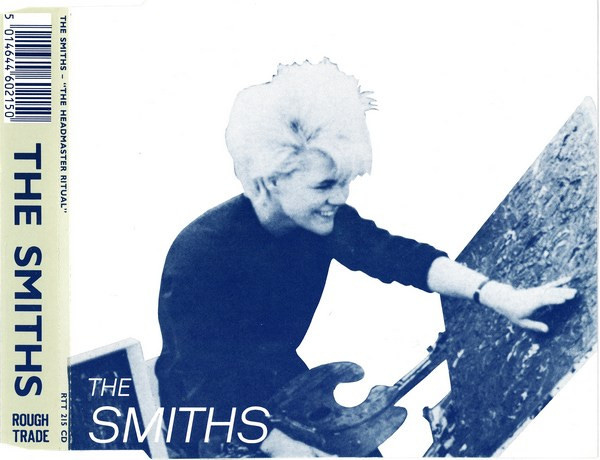
It was eventually released a second time as a CD single in the UK in December 1988, well after the breakup of the Smiths.
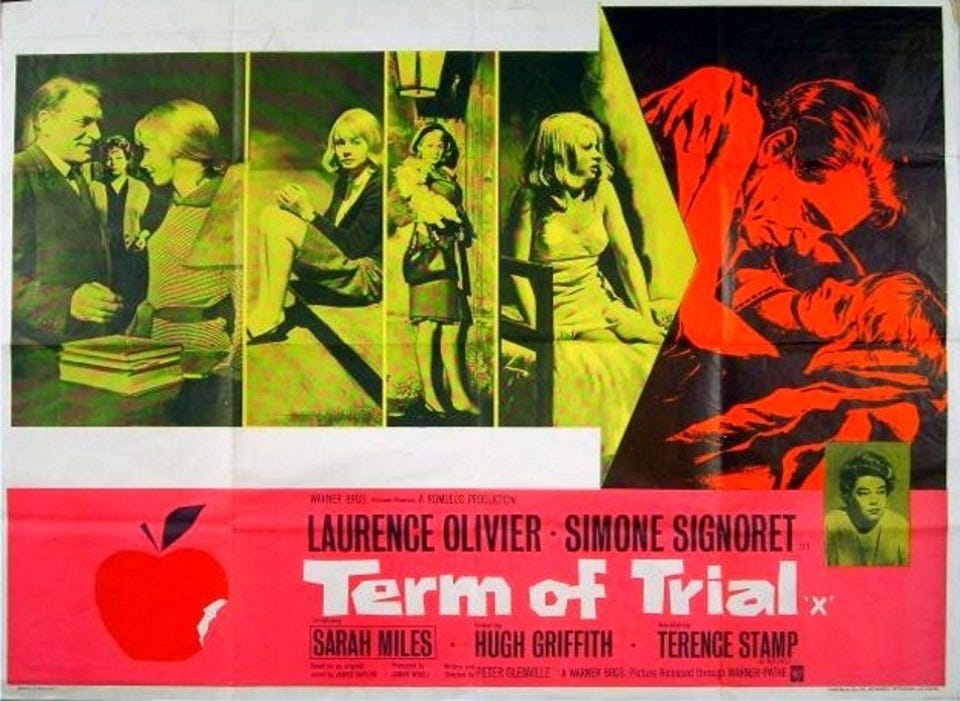
The cover art for the Netherlands single was originally intended to be a still of Sir Laurence Olivier with cane raised over Terence Stamp's hand from the 1962 film Term of Trial.1
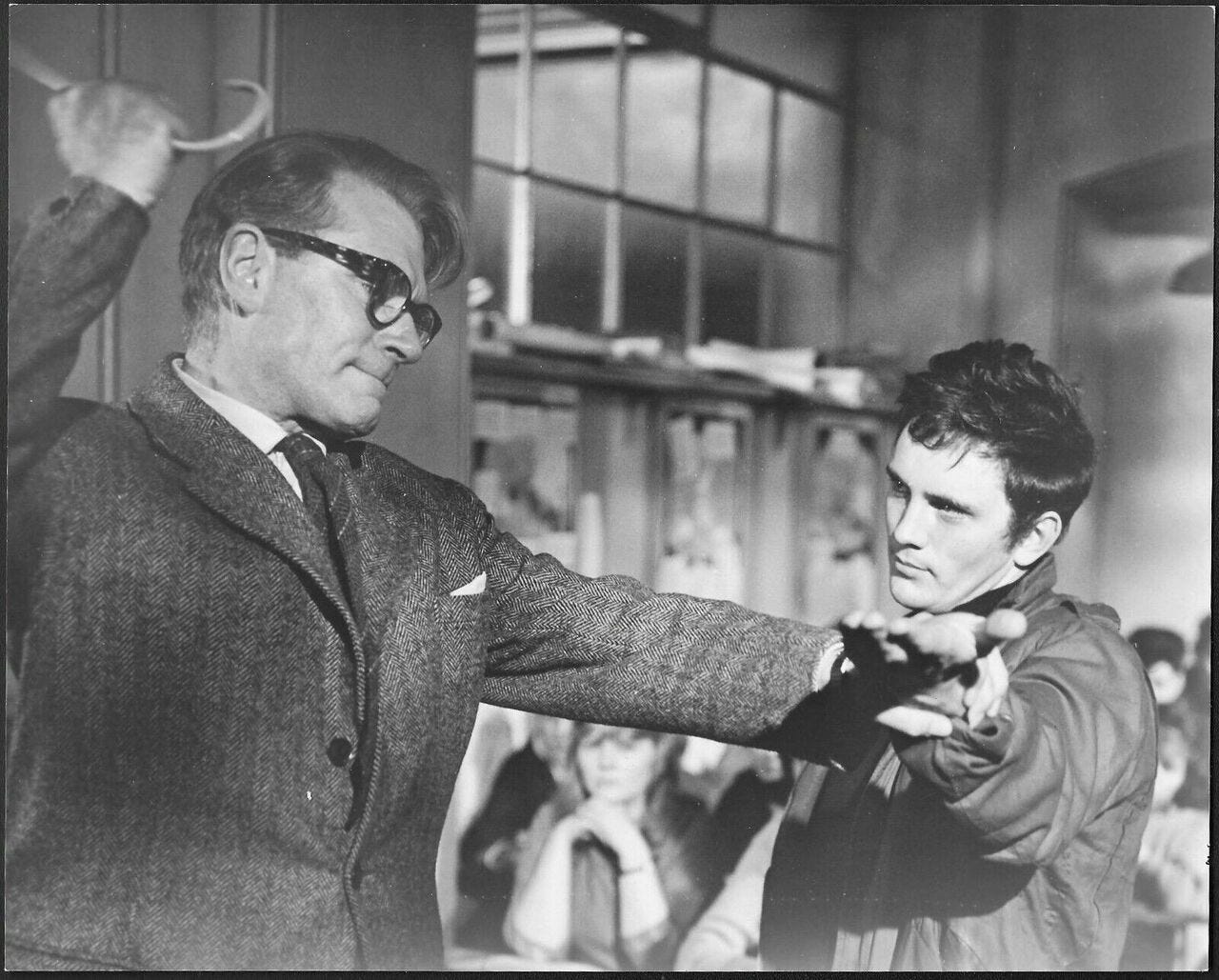
While Terence Stamp gave his consent to use his image, Olivier was slow to respond in time for the release. Consequently, the single features a black-and-white image of a child dressed as a cowboy from the 1965 film The Uncle2.
The cover art for the 1988 UK single featured Viv Nicholson (for the third time).
It goes without saying that 'The Headmaster Ritual' is a criticism of the English education system, citing the 'belligerent ghouls' who ran Manchester schools. In Autobiography, Morrissey paints a bleak picture of his time at St Mary’s Secondary Modern School3 in Stretford, Greater Manchester, chastising teachers as “notoriously mean disciplinarians.”
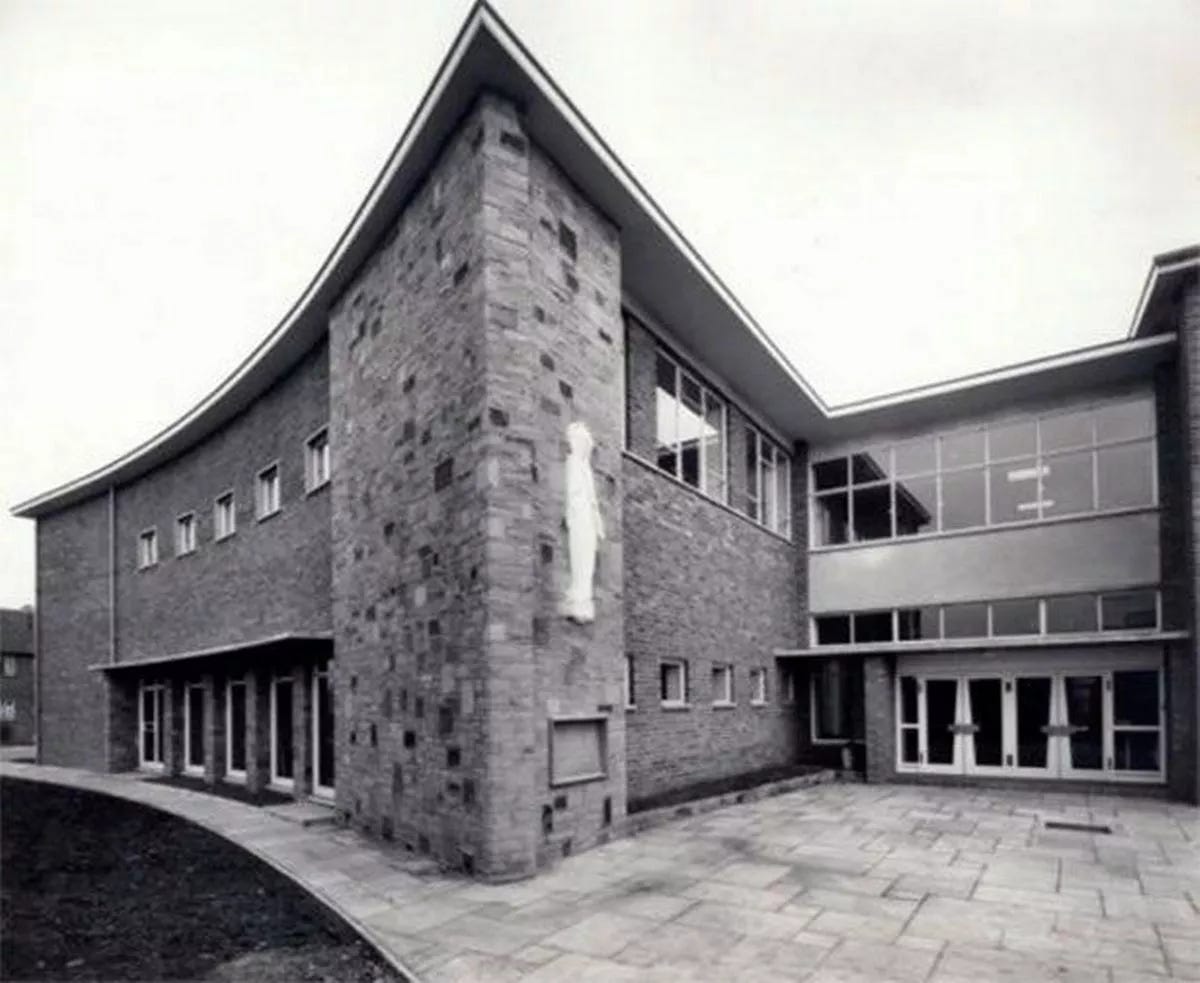
What's more, he goes on to describe a teacher coming onto him through the pretext of rubbing anti-inflammatory cream onto his wrist:
“At 14, I understand the meaning of the unnecessarily slow and sensual strokes, with eyes fixed to mine,” writes Morrissey about the teacher, who he later describes approaching him after a shower and asking to look at a scar on his stomach. “But his eyes were lower… and for the first time you are forced to consider yourself to be the prize, or the quarry.”
The Manchester Education Authority was of a different opinion, going so far as to threaten to ban the Smiths from playing in Manchester due to their objection to the song's lyrics.
'The Headmaster Ritual' is supposedly the only song on which Marr made a suggestion to Morrissey about the lyrics. Specifically, Marr suggested a change to the line “bruises bigger than dinner plates” to “bruises big as dinner plates”. As Marr recounted, "An eyebrow was very definitely raised at this point, and he went away to mull it over. When we reconvened 24 hours later, he said he'd given it a lot of thought and was impressed by my observation. Then, of course, he went on to do sod-all about it!"
Marr, who wrote the music to the track in open E tuning, recalled "I had no idea what I was doing when I wrote it, and I quite like that. I think it's a handy device for cutting out the brain static that gets in the way of coming up with chord changes."
Musically, the song opens with an open-tuned chord that Marr has described as what Joni Mitchell4 "would have done had she been an MC5 fan." Most of the song's guitar parts, according to Marr, were played on a Rickenbacker:
"'The Headmaster Ritual' main riff is two tracks of Rickenbacker. I wasn't specifically thinking of the Beatles 'Day Tripper' (even though it sounds like it) but I did think of it as a George Harrison part."
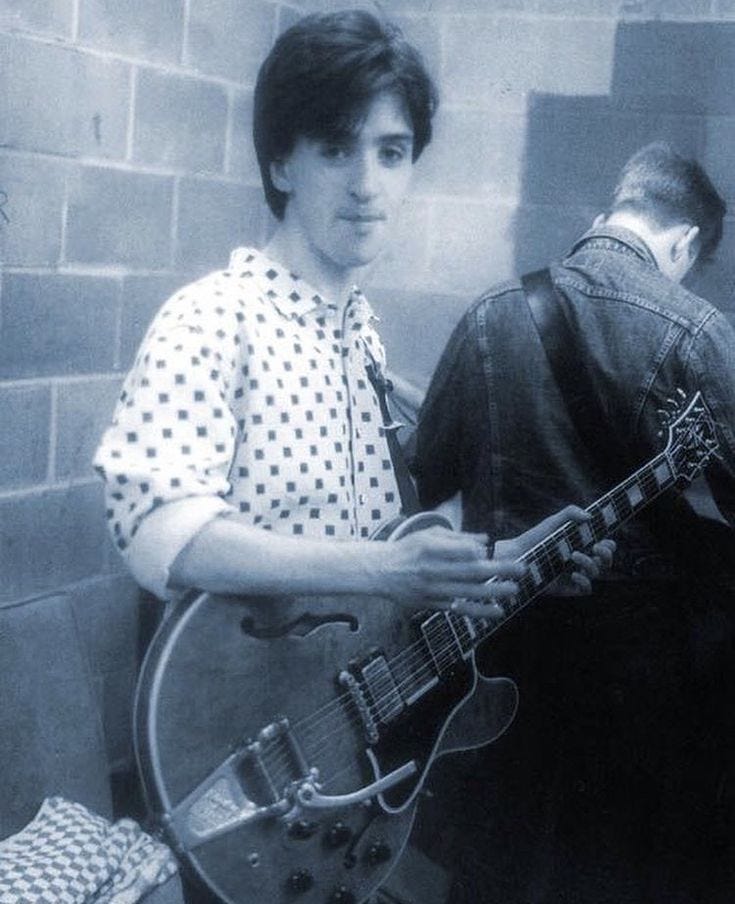
Marr noted that composing the song took him the longest ever for him to write any song:
"'The Headmaster Ritual' was a favourite of mine for a long time just because I'm really pleased with the guitars on it and the strange tuning... For my part, 'The Headmaster Ritual' came together over the longest period of time I've ever spent on a song. I first played the riff to Morrissey when we were working on the demos for our first album with Troy Tate. I nailed the rest of it when we moved to Earls Court. That was around the time when we were being fabulous."
- Johnny Marr, Record Collector, 1992
According to Stephane at PassionsJustLikeMine.com, Marr started writing the music in July 1983 during the Troy Tate recording sessions for the band's debut album. He continued working on the music throughout 1984. The song took its final form in October 1984 [16 months from inception to completion] during the recording sessions for the Meat Is Murder album when the band rehearsed it and Morrissey gave it its lyrics.
For his part, Morrissey has described 'The Headmaster Ritual' as "a live-wire spitfire guitar sound that takes on all-comers."
The author deems ‘The Headmaster Ritual’ as nothing short of brutal brilliance, beginning with Marr’s opening guitar riff and then Andy Rourke’s nimble bass line. Mike Joyce adds adroit drumming with an oddly complementary ‘splash’ effect as all the while Morrissey steadily unleashes his devastating lyrics:
Belligerent ghouls
Run Manchester schools
Spineless swines
Cemented minds
Sir leads the troops
Jealous of youth
Same old suit since 1962
He does the military two-step
Down the nape of my neck
I want to go home
I don't want to stay
Give up education as a bad mistake
Mid-week on the playing fields
Sir thwacks you on the knees
Knees you in the groin
Elbow in the face
Bruises bigger than dinner plates
I want to go home
I don't want to stay
Belligerent ghouls
Run Manchester schools
Spineless bastards, all
Sir leads the troops
Jealous of youth
Same old jokes since nineteen-two
He does the military two-step
Down the nape of my neck
I want to go home
I don't want to stay
Give up life as a bad mistake
Please excuse me from gym
I've got this terrible cold coming on
He grabs and devours
He kicks me in the showers
Kicks me in the showers
And he grabs and devours
I want to go home
I don't want to stay
Listen to ‘The Headmaster Ritual’ here:
Term of Trial is a 1962 British drama starring Laurence Olivier and Terence Stamp. Olivier’s character, Graham Weir, is a schoolteacher whose criminal record for refusing to fight during World War II has prevented him from progressing in his teaching career. Now, years later, he is married to an embittered woman, and he is a teacher in a school with many disaffected pupils. His sincere interest in his pupils' progress leads him to get involved in their personal situations. His particular attention to Shirley Taylor (played by Sarah Miles in her debut film), a student who develops a crush on him, leads him into serious trouble.
The Uncle is an obscure 1965 British drama directed by Desmond Davis. The film’s plot involves Gus Morton, who has been a childless uncle all his life. But when his quarrelsome, unmanageable 7-year-old nephew, Tom comes to spend the summer holidays with him, he finds the responsibilities of his position almost too hard to bear.
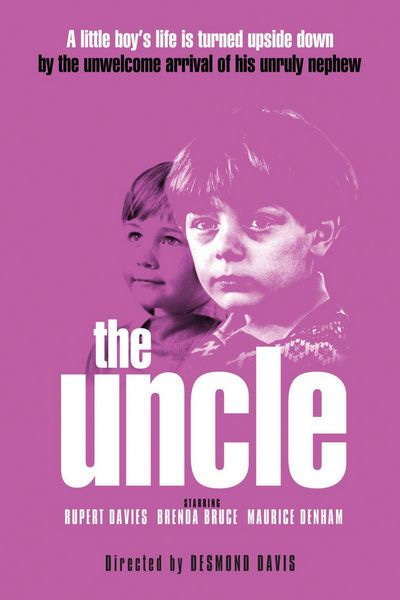
The film failed to get a release in British cinemas, or any London showing. As the film was seen by a few critics, who praised it highly, this was something of a scandal in 1965, especially as the one earlier feature film directed by Desmond Davis, Girl With Green Eyes (1964), had been extensively lauded, with Davis hailed as an exciting new directing talent. The film was made for British Lion, a company which was in a very bad way by the mid-60s, with a number of its films (e.g., The Leather Boys, Hide And Seek, A Place To Go) being shelved for lengthy periods, usually about two years, before getting shown in cinemas. Although it was better-liked than almost all of theses delayed films, The Uncle had the worse fate of not being screened at all; it was hardly ever shown on British television, either. In the early 2020s it has been shown several times in the UK by Talking Pictures TV. The author cannot account for how it is that Morrissey was even aware of this film in 1985 given that it had not yet been released to the general public, whether in the cinema or on television. One can reasonably assume that Morrissey’s renowned interest in British cinema had motivated him to locate The Uncle via available film archives at some point prior to 1985.
St Mary’s Secondary Modern School opened in 1955 and closed in the early 1990’s. Morrissey was a pupil at the school in the early 1970’s.
Roberta Joan ‘Joni’ Mitchell (née Anderson; born November 7, 1943) is a Canadian-American singer-songwriter, multi-instrumentalist, and painter. As one of the most influential singer-songwriters to emerge from the 1960’s folk music circuit, Mitchell became known for her personal lyrics and unconventional compositions which grew to incorporate pop and jazz elements.